Rapid Prototyping: 10 Secrets to Build, Fail, and Succeed Faster
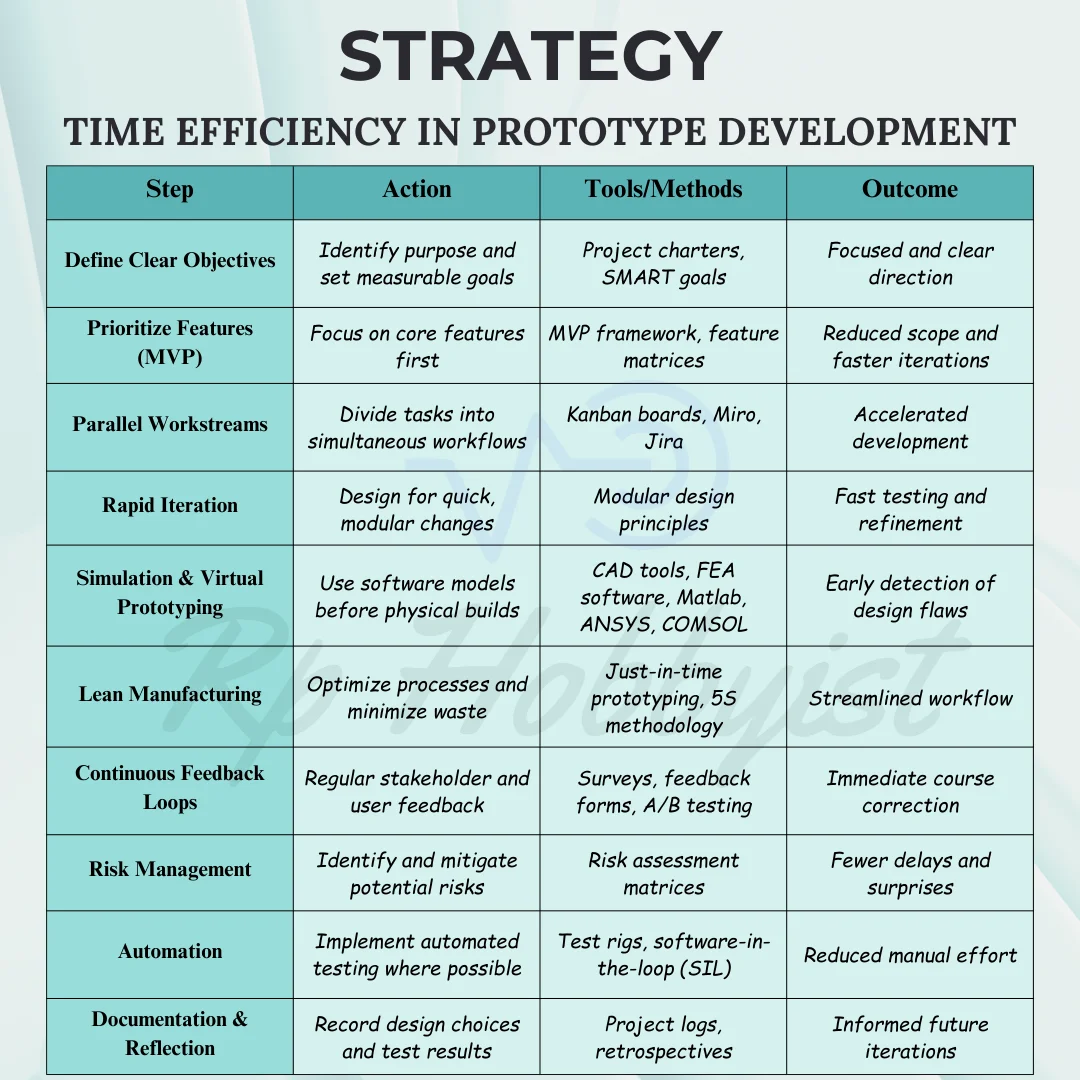
Bringing a project like the Orion Drone to life is a rush, but the "prototype phase" is where most ideas go to die. It's a time sink. I've spent weekends chasing a single software bug or waiting for a 3D print to finish, only to realize the design was flawed from the start.
Over the years, I've developed a "brute-force" efficiency strategy to get through the workshop muck and into a working product faster. Here's how I do it.
1. Low-Fidelity First
Stop reaching for the high-end filament on Day 1. I use cardboard, hot glue, and scrap PLA to prove a mechanical concept before I even open Fusion360. If it doesn't work in cardboard, it won't work in Carbon Fiber.
2. The MVP Mindset
Don't build the "perfect" drone. Build the thing that proves it can stay in the air for 10 seconds. Strip away the GPS, the gimbal, and the LEDs. Focus on the core risk first.
3. Parallel Workflows
While my 3D printer is humming away on the chassis, I'm already at the bench testing the ESCs and flight controller. Never wait for a machine if you can be doing something else.
4. Modularity is Life
I design everything in chunks. If the arm of the drone breaks, I don't want to reprint the whole frame. Modular design saved me weeks of rework on the 3018 cnc-upgrade.
5. Virtual Stress Testing
Before I trust a new design, I run FEA (Finite Element Analysis) in Fusion360. It's not perfect, but it identifies weak points before I waste material on a print that snaps under load.
6. Rapid Feedback
I post my progress on Instagram or Discord early. The feedback I get from other makers often spots a logic flaw I've been staring at for hours without seeing.
7. Automation & SIL
I use Software-in-the-Loop testing to simulate my drone's flight logic on my PC. It's a lot cheaper to "crash" a virtual drone than a real one.
Interactive Mini-Game: The Prototyping Simulator
Orion Drone Dashboard
Frequently Asked Questions
What does "fail fast" actually mean in hardware prototyping?
It means building the cheapest, fastest proxy of your idea - like cutting a chassis out of cardboard - to test core mechanics immediately, rather than spending weeks perfecting a CAD model that might be fundamentally flawed.
How does modular design speed up the prototyping cycle?
By designing your product in separate, independent modules, you only need to reprint or remachine the specific part that broke during testing, rather than manufacturing the entire assembly from scratch every iteration.
What is Software-in-the-Loop (SIL) testing?
SIL allows you to connect your hardware's code to a virtual simulation. You can test your drone's flight logic to ensure it works before risking your expensive physical prototype in a real-world crash.
What is the difference between low-fidelity and high-fidelity prototypes?
Low-fidelity prototypes (cardboard, basic 3D prints) validate form and fit quickly at low cost. High-fidelity prototypes use production materials and custom electronics to test functional performance and aesthetic appeal before tooling.
How do I balance prototype speed with design accuracy?
Use the '80/20 rule'. Focus only on the critical sub-assembly or feature you are trying to test. Don't waste time making the entire prototype perfect if you only need to validate a single hinge or snap-fit.