Don't Fry Your Gear: The Essential Guide to Workshop-Proof IP Ratings
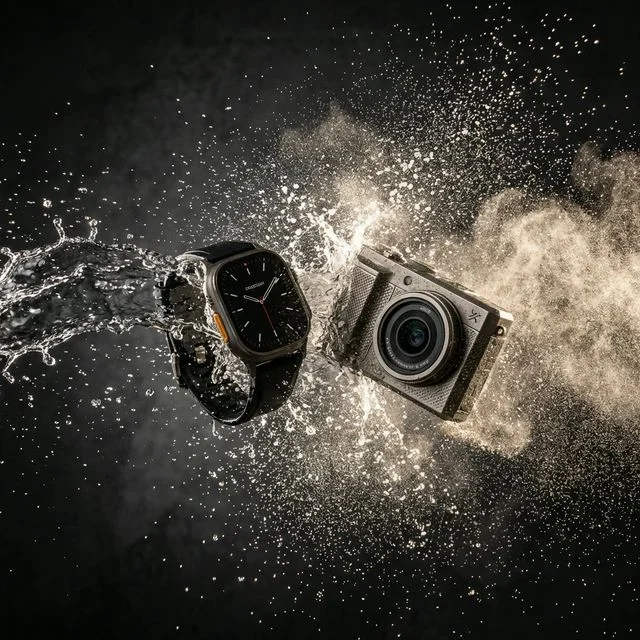
I learned about Ingress Protection (IP) the hard way. It happened during my first week using the 5050 CNC Upgrade. A stray spray of coolant hit an unsealed terminal block on my control board, and in a flash of blue light, a month of work was gone. That's the day I stopped looking at IP ratings as 'marketing jargon' and started seeing them as a survival guide for my gear.
If you're building gadgets that will live in a dusty workshop, an oily garage, or near a 3D printer that occasionally spits out filament shards, you need to know exactly how well your enclosure is sealed. Let's break down the IP system from a maker's perspective.
The Format: IP-XY
The rating is simple. 'IP' followed by two numbers. The first is for Solids (dust, fingers, metal shavings) and the second is for Liquids (coolant, rain, that coffee you just spilled).
Ingress Protection
The Workshop Threat Level
In our world, the threats aren't just 'dust'. It's conductive aluminum shards from a CNC or carbon fiber dust that can short out a motherboard in seconds. That's why I aim for Level 5 or 6 on the solids scale for any enclosure that sits near a machine.
| Level | Workshop Context | Description |
|---|---|---|
| 4 | Nails/Wires | Will stop a loose screw from falling into your PSU. |
| 5 | Sawdust/Plastic | Most dust is blocked. Good for 3D printer enclosures. |
| 6 | Metal Shards | The Gold Standard. Nothing gets in. Mandatory for CNC electronics. |
Putting it Together
When you're designing something like the DIY Bench Power Supply, you're usually aiming for IP20 internally (to stop you from touching live wires) but the external case needs to be higher if it's sitting in a messy environment.
Understanding these numbers saved my second CNC build. Now, I don't just 'box it up'; I seal it for the environment it's actually going to live in. Don't let a \$0.50 seal be the reason your \$500 project dies.
Frequently Asked Questions
What does an IP67 rating actually mean for a workshop sensor?
The first digit '6' means it is 100% dust-tight - vital against abrasive CNC metal shavings. The second digit '7' means it can survive full immersion in water up to 1 meter for 30 minutes, protecting it from severe coolant spills.
Is IP54 sufficient for outdoor electronics?
IP54 protects against dust and standard splashing water (rain). It is generally fine for sheltered outdoor use, but for direct, heavy weather exposure or wash-down environments, IP65 or higher is recommended.
How do I seal custom 3D printed enclosures to achieve high IP ratings?
FDM prints are naturally porous. To achieve an IP rating, you must treat the surface with epoxy or spray sealants, use TPU gaskets for lids, and install rated cable glands for wire passthroughs.
What does the 'X' mean in an IP rating like IPX5?
The 'X' indicates that the product has not been tested for that specific category (in this case, solid particle protection/dust ingress resistance), usually because the manufacturer focused solely on liquid testing.
Are gaskets mandatory to achieve an IP65 rating?
Yes, rubber gaskets or silicone O-rings are typically required to seal the joints between enclosure parts under compression, preventing water ingress under low-pressure jets.