Engineering Secrets: What Everyday Products Reveal About Manufacturing

I used to look at vintage appliances that were still humming along after thirty years and wonder why older products seemed to last forever while newer ones feel like they age faster. After getting a closer look at engineering systems, I realized this shift is not accidental. It is the result of very deliberate decisions made right at the intersection of engineering and economics.
What is really happening behind the scenes?
Products today are not designed to last as long as physically possible. Instead, they are designed to last exactly as long as necessary. This means meeting specific customer expectations, surviving the standard warranty period, and staying competitive in price.
The "Launch Quality" Secret
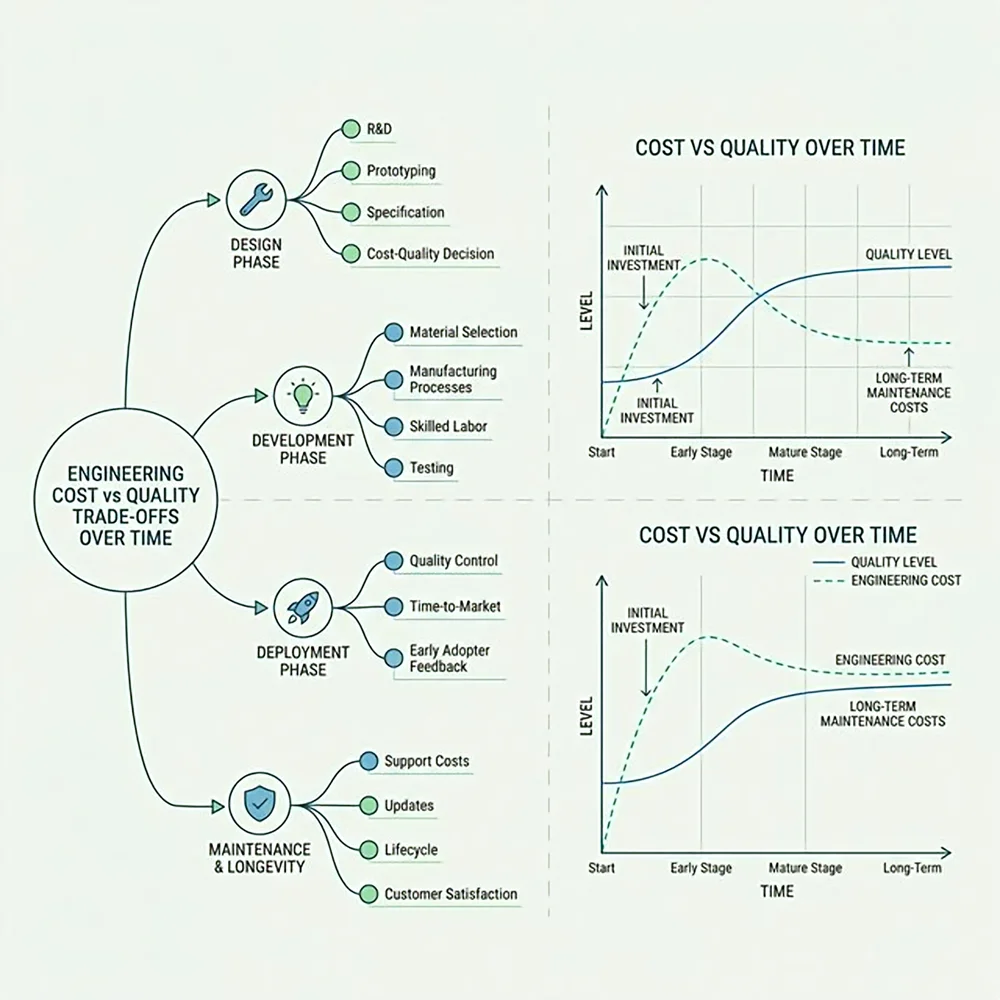
If you watch closely, you will see a fascinating pattern play out whenever a brand new product hits the market. Companies simply do not want to take the risk of a high failure rate during a critical launch window. Because of this fear, they initially launch the product with the absolute best quality and highest grade materials.
But fast forward a year, and you might notice the quality reduce slightly. In technical terms, the company begins utilizing "optimized resources." Once the launch is successful and the initial risk has passed, they quietly introduce cost cutting and manufacturing optimization on the established product to maximize their profits.
Why do companies think this way?
Every single design decision carries a tangible cost. Using better materials, adding redundancy, or increasing safety margins all drive up the final product price. The hard truth is that most customers are not willing to pay double for a product that lasts twice as long. That financial mismatch drives companies to optimize instead of maximize.
There is also the reality of how fast technology moves today. A product that could technically last 15 years might become entirely outdated in just 5. So from a company perspective, designing for extreme longevity often does not make sense at all.
The Shift to Data
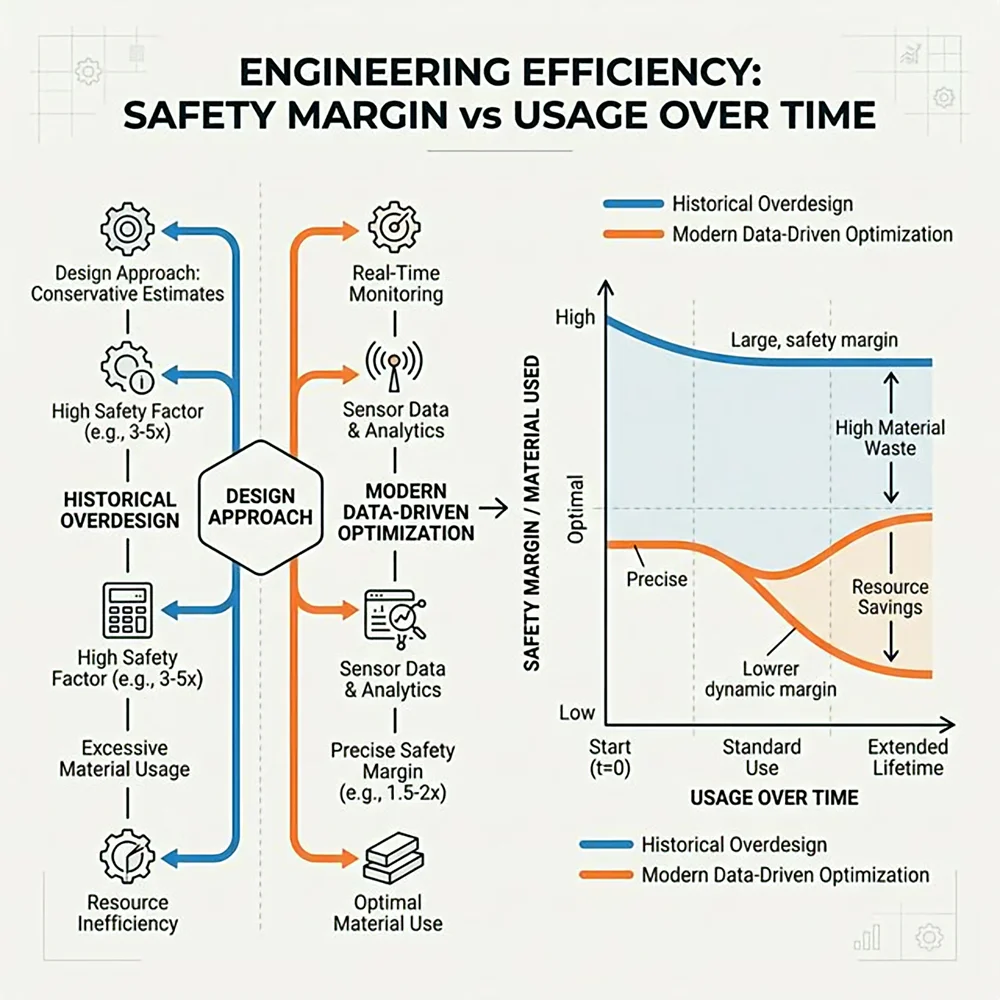
Another big shift compared to two decades ago is the explosion of data. Engineers today have constant access to real usage data, failure statistics, and advanced simulation tools. In the past, uncertainty led directly to overdesign. Today, precision leads to tighter margins.
Why older products lasted longer
This explains exactly why older products lasted longer. They were often built with massive safety factors because engineers did not have the same level of data we have today. They added extra material, used conservative assumptions, and ended up creating products that could survive far beyond their expected use.
Modern products, on the other hand, are highly optimized. They use just enough material, just enough strength, and just enough durability to do the job.
The Economic Reality
At the end of the day, companies are optimizing profit over time. If a product lasts too long, customers do not come back to buy another one. If it fails too early, customers lose trust in the brand.
So the ultimate goal is to find the precise balance point where reliability meets business sustainability. This is why modern products feel so different. They are not worse. They are simply more precisely engineered to match real-world use and strict economic constraints.
Frequently Asked Questions
Why are everyday products so complex to manufacture?
Even a "simple" product like a coffee maker requires supply chain orchestration for injection-molded plastics, PCB fabrication, thermal regulatory testing, and global logistics before it ever hits a retail shelf.
What is Design for Manufacturing (DFM)?
DFM is the engineering practice of designing a prototype specifically so it can be mass-produced efficiently. This includes optimizing draft angles for injection molding and minimizing unique fasteners.
How do BOM (Bill of Materials) costs affect retail pricing?
The BOM is the raw cost of parts. The retail price is usually 3x to 5x the BOM cost to account for R&D, manufacturing overhead, marketing, distribution, and wholesale margins.
Why do manufacturers prefer injection molding over 3D printing for mass production?
While injection molding has high upfront tooling costs, its per-unit cost is extremely low, and it offers unmatched speed, consistency, and material properties at volumes exceeding 5,000 units, making 3D printing ideal only for low volumes or prototyping.
What is a draft angle in plastic injection molding?
A draft angle is a slight taper (usually 1 to 2 degrees) applied to the vertical walls of a molded part to allow it to easily release from the mold tool without friction or damage during ejection.