CE, FCC, RoHS: The "No-Nonsense" Guide to Product Certifications
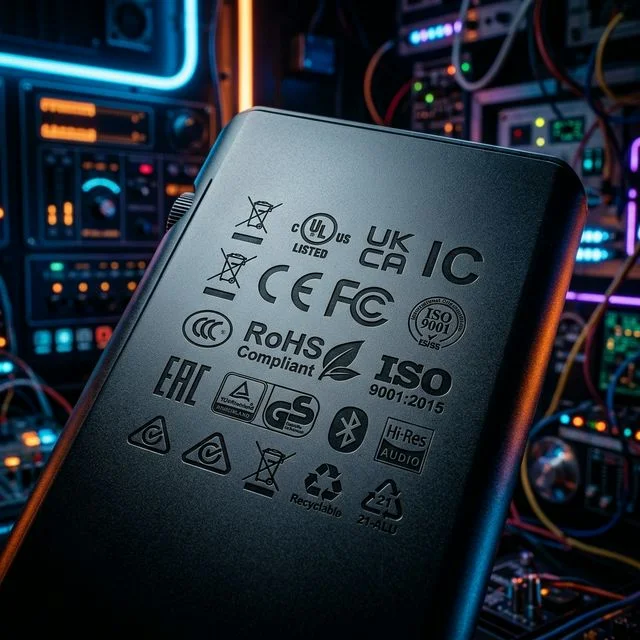
Have you ever flipped over a brand new gadget and stared at that cluster of tiny, cryptic logos on the back? Most of us completely ignore them in our rush to unbox the latest tech. But those little symbols are actually doing a massive amount of heavy lifting behind the scenes.
I was recently looking at a trade show display promoting "Trend-Driven Co-Creation." It sounded incredibly innovative, promising products that perfectly resonate with local consumers. But right below that flashy headline was a row of certifications. It was a stark reminder of a simple reality in modern manufacturing: you can have the most brilliant, trendy product in the world, but without the right stamps of approval, it is not going anywhere.
Why You Need to Read This
These certifications are the ultimate gatekeepers of global trade. They ensure everything from basic human rights to the prevention of electrical fires. Let us decode exactly what these labels mean and why they are the unsung heroes of the products we use every single day.
1. The Human Element: Ethical and Social Compliance
Before a product is ever plugged in, it is crucial to know how it was made and how the workers behind it were treated. True innovation cannot happen at the expense of human welfare.
- amfori BSCI (Business Social Compliance Initiative): This is a leading global framework that helps companies monitor and improve social compliance within their supply chains.
Why it matters: It acts as a shield against unethical manufacturing. Factories must adhere to fair pay, safe working environments, decent hours, and a strict zero-tolerance policy for child or forced labor. - Sedex (Supplier Ethical Data Exchange): Similar to BSCI, Sedex provides radical transparency. Through rigorous auditing processes, it evaluates labor standards, health and safety protocols, and overall business ethics.
Why it matters: It builds real consumer trust. When a brand uses Sedex, they are proving they genuinely care about worker welfare, not just their profit margins.
2. The "Don't Burn the House Down" Squad: Global Safety Marks
Electrical goods can pose serious hazards if poorly designed. These certifications are your guarantee that a product will not short-circuit the moment you turn it on.
- CE (Conformité Européenne): This is the ultimate passport for the European market. It is a mandatory manufacturer declaration that a product meets strict EU standards for health, safety, and environmental protection.
- ETL Listed & UL Listed: These are the heavy hitters in North America. Whether issued by Intertek (ETL) or Underwriters Laboratories (UL), these marks prove a product has survived brutal, independent laboratory testing to prevent fire and shock hazards.
- SAA Approval: Heading down under? Australia and New Zealand have incredibly strict electrical laws. SAA approval guarantees a product is designed to safely handle local voltage conditions.
- FCC (Federal Communications Commission) Mark: Ever wonder why your new smart lamp does not scramble your Wi-Fi router? The FCC mark certifies that the electromagnetic interference from a device is kept safely under federal limits.
3. The Earth & Health Protectors
Modern product creation must account for the entire lifecycle of an item, including its impact on our bodies and the planet.
- RoHS (Restriction of Hazardous Substances): This EU directive strictly limits dangerous heavy metals like lead, mercury, and cadmium in electronics. It protects the factory workers assembling the gear, the consumers using it, and the environment when the device is finally recycled.
- REACH: This comprehensive European regulation forces companies to identify and manage the risks linked to industrial chemicals. It ensures ecosystems and human populations are kept safe from toxic runoff and exposure.
- ErP (Ecodesign Directive): This framework sets ecological requirements for products that consume energy. It pushes manufacturers to improve energy efficiency, which lowers global greenhouse gas emissions and directly saves consumers money on their monthly utility bills.
- FDA Compliance: For products sold in the US that impact human health, FDA oversight is non-negotiable. Whether it is a wearable health tracker, a cosmetic tool, or a food container, this ensures the materials are completely safe for prolonged human contact.
4. Behind the Scenes: The Company-Wide Standards
Finally, before a single physical item is produced, a company’s internal operations must be airtight. The "ISO" family of certifications proves that an organization operates efficiently and securely.
- ISO 9001 (Quality Management): This shows a company has robust processes in place to catch mistakes before they reach the consumer. It is the gold standard for consistent, high-quality output.
- ISO 14001 (Environmental Management): This proves the company is actively working to minimize its carbon footprint and reduce industrial waste across all of its daily operations.
- ISO 27001 (Information Security): In an era of smart devices and connected apps, protecting your data is paramount. This certification guarantees a company has a strict, hacker-resistant framework to keep consumer data safe.
The Bottom Line
The next time you are shopping for tech, take a second to look for the alphabet soup. In a world driven by rapid, trend-focused innovation, these certifications are your ultimate proof of quality. They guarantee that the brand you are buying from values safety, ethics, and the environment just as much as a sleek design.
Frequently Asked Questions
Why is amfori BSCI important in manufacturing?
amfori BSCI is a social compliance framework that ensures factories adhere to ethical labor standards, including fair pay and safe working conditions. It is a critical certification for brands committed to human rights and corporate social responsibility.
What does RoHS compliance protect against?
RoHS (Restriction of Hazardous Substances) restricts the use of dangerous materials like lead, mercury, and cadmium in electronics. This protects both factory workers and the environment from toxic exposure throughout the product's life cycle.
Is CE marking mandatory for the European market?
Yes. The CE mark is a mandatory manufacturer declaration that a product meets all relevant European health, safety, and environmental protection standards. It acts as a "passport" for goods to be sold within the European Economic Area.
What is the difference between UL Listed and UL Recognized?
UL Listed indicates a complete, finished product has been tested and meets safety standards, whereas UL Recognized indicates a component (like a power supply or switch) within a larger system has been certified for use in that system.
Can a small startup self-certify for CE marking?
Yes, for many product categories under the Low Voltage and EMC Directives, manufacturers can self-certify by building a Technical File and signing a Declaration of Conformity. However, certain high-risk products require third-party testing by a Notified Body.